The Red Wings new arena can be built through a land swap
There is a city, with a Mayor, who used to be a professional basketball player. This Mayor wants to build a new arena for their basketball team....DETROIT Mayor Dave Bing, you say? NOPE! Sacramento Mayor Kevin Johnson was a point guard for the Phoenix Suns n the 1990s. He was elected Mayor in 2008 and is focused on building a new basketball arena for the Kings. According to Governing Magazine, their current arena (Arco) is the oldest and smallest arena in the NBA. Its' location is far from the city centre and its has no luxury boxes. The voters do not want to raise their tax to support a new arena, and the city, like Detroit and others, faces a large budget shortfall, with the State not in any position to help. So the Mayor thought out of the box. With the support of City Council, he negotiated a three-way land swap with a developer to help fund the arena. The city will offer land near the current arena as a new location for the state fairgrounds. The fair's current location would be sold to a developer, with the proceeds used to fund a new arena. It it all goes well, the new arena would anchor a new development in Sacramento's downtown on a brownfield site where the railyards used to be. The new arena will be part of a mixed development that will include an intermodal transportation hub with shopping, restaurants, offices and new residential units (12,000 of them). Unfortunately, the deal is still a deal and no contracts have been signed. The fair's governing board and the legislature would both have to agree to the plan. Hmmmm....it does sound familiar. The Detroit Red Wings want to play in a new arena and the Detroit Pistons are for sale. Detroit Mayor Dave Bing, like Sacramento Mayor Kevin Johnson, not only played in the NBA but he also is in the Hall of Fame. Michigan's State Fair Grounds are in the city of Detroit (be it on the edge of the city, but we do have a train station that sits vacant, near a proposed intermodal facility that is connected to two strong neighborhoods of the City (Greektown and Southwest Detroit). While I am sure the Detroit City Council, State Fairground folks and Michigan Legislature would all have to agree, I think what they are doing in Sacramento, is a slam dunk for Detroit.
We have a lot to learn from ourselves
In the June 2010 issue of Governing, writer Josh Goodman congratulates the City of Livonia (located in Wayne County, just west of Detroit) as the highest rate of return of U.S. Census applications of any city with at least 50,000 people. To what does the U.S. Census attribute it too. According to Detroit-area demographer Kurt Metzger, "it isn't what it did, but rather what it is. Livonia has a lower unemployment rate than its municipal neighbors. Foreclosures and abandoned buildings are not necessarily a problem, and 90 percent of its residents live in homes they own. Its' populations is constant, not dwindling, with a median age of 43, six years older than the national average. Livonia's mail in rate was 87%, with Detroit at 62% and the national average at 72% -- the form was just five questions. We have something to learn from Livonia and once again, Michigan sets the benchmark for the rest of the country. For more on the story, see www.governing.com.
Yelp!!!
The way-forward for web-based communications is to turn to mobile communications. The number of smart phone users has increased dramatically over the past six-months and may increase even more, depending on Steve Job's announcement on June 7th. It is widely rumored that he will announce that he is making the iPhone available to Sprint and Verizon users. Perhaps that is why Wal-Mart is selling the iPhone for $97. Nonetheless, while we are transitioning from our desktops to our laptops and our laptops to our mobile phones, communications are not just getting shorter with every Tweet, they are getting more local thanks to now popular apps such as Four Square and Yelp! According to the May 2010 of Inside Counsel, YELP, the on-line business review site, changed its policies as a result of a class action lawsuit charging YELP with the manipulation of content on its review pages. The plaintiffs allege that YELP would change the content based on the ad dollars from a particular company. As a result of the lawsuit, YELP has instituted a number of issues to be more transparent. No matter how we communicate the best communication still comes from word-of-mouth and friend-to-friend.
Is Montreal the new Detroit?
Last night the Montreal Canadians beat the defending Stanley Cup Champion Pittsburgh Penguins to go on to the Eastern Conference Finals. Shortly after their victory, people in Montreal began celebrating along Saint-Catherine Street by starting fires, looting stores and turning cars over. MSNBC reported today that last night's riots were not as bad as those in 2008, 1993 and 1986.
With all these riots in Montreal, why do we still hear so much about the 1984 celebration following the Detroit Tigers World Series victory. Why is Detroit held up as an example of fans "rioting." It seems that there are more of these celebrations in Montreal than in Detroit. While we each have great professional teams that frequent the Stanley Cup Finals, World Series and NBA Payoffs, it should not be a blemish on our cities to win.
While the fans in Montreal should have celebrated a bit more cautiously, both Detroit and Montreal need to be more diligent in creating a brand for their cities and a positive brand experience that people will remember.
There are so many other things to remember about our great cities, but will Montreal now become the new Detroit? Perhaps, but Detroit also may become the new Montreal. A city known for its culture and great quality of life. A cosmopolitan city enriched by its immigrant communities and diversity of culture. A city where you can eat a coney island hot dog on one corner (with onions, chile and mustard), and Moussaka on the other . A city known for its resilience, its hard work ethic and for serving as the center of innovation. There is so much to learn about Detroit, but more importantly there are so many things to experience...in celebrating victories like the one in Montreal last night, but also in experiencing our neighborhoods and our people.
Video from 1993 Montreal Riots *AP Photo
Wind - It means the world to us!
[gallery] I am returning to Detroit this evening by way of Via Rail, from Toronto. I was in Toronto for an invitation only road show by Vestas Wind. Vestas is a Danish manufacturer, seller, installer, and servicer of wind turbines. Those attending the day long event were financiers, developers, consultants, academics and government officials from Ontario. The purpose of the meeting was to talk about the potential of off shore wind in the Great Lakes, an issue I just completed a project for with South Point Wind -- an off shore wind project proposal in Lakes Erie and St. Clair.
The discussion centered on the need to create a "New Frontier" to create energy independence for Canada and the United States. Vestas has been in this industry for 30 years and installed their first off shore wind turbine in 1990. They know the industry and the opportunities the Great Lakes provide in terms of transitioning to sources of renewable energy.
However, as we have learned from current initiatives now under way on Michigan's west coast and in Ontario, to begin this process it is vital to engage key stakeholders from the start. This includes the First Nation's in Canada and Native American's in the U.S., government officials from the local state/provincial and federal levels, industry, academics, suppliers, labor, local communities, the media and others in the process.
From the initial stages of a project such as off shore wind, it is vital that the developers of the project engage the community in a discussion of what they seek to accomplish. In fact, funding from investors or others may hinge upon their strategic communications plan.
Project organizers should understand that they will not convince everyone on the merits of their project, but they can start early, by creating the messages to convey while avoiding rumors and dispelling myths. This includes meeting with local officials to gain their input and support, editors of local papers and the other dailies. In meeting with the community at-large, it is important to make sure that you also have the people financing or backing the project, your legal team, lobbyists, consultants and the appropriate government officials available to answer questions and address concerns. In bringing "the team" together and in front of the community, developers will eliminate any question about transparency, will aptly address any concern by the community, and will go along way in developing relationships with those they intend to invest in.
The Pulse of Detroit
Yesterday, the Detroit News Hub released the results of study, entitled "Detroit Pulse," which found that nearly half of Southeast Michigan residents say they love living in the Detroit region. But most are frustrated by current conditions and believe elected officials at all levels must work together to revitalize the region, according to a recent survey.
The study took the pulse of the region from a number of different perspectives (2,030 of them) including quality of life, economics, demographics, tourism and revitalization efforts. About 11% of those interviewed love it here and wouldn’t think of moving, while 39% love it here but are discouraged with current conditions. Another 8% like it here and will do whatever they need to do to stay. However, 31% said they dislike Detroit and want to move to another region.
In fact, the report concludes that those surveyed find the three best things about living and working in Detroit are:
1. Sporting events and our teams
2. Entertainment & culture
3. Up North
The survey also found that to re-emerge, revitalization must start with the downtown. In fact, the "top 4 venues" were listed as:
1. Comerica Park
2. The casinos
3. Fox Theater
4. Detroit Riverwalk
Those surveyed said they would come more often if there was free parking, better security and more waterfront activities. Greektown, Hart Plaza, the Riverfront and Foxtown were the most familiar places to those surveyed. The areas with the lowest sense of familiarity were:
1. Midtown 2. Rivertown 3. Corktown 4. Mexicantown
In addition to: The Century Club, Motown Historical Museum, MOCAD, Flimore Theater, Majestic Theater, Gem Theater, Music Hall and the D.A.C.
LEADERSHIP
The study showed that 59% of Southeast Michigan residents do not feel elected leaders are working together effectively to revitalize Detroit and the region and all levels of government need to be involved in the effort. 80% of SE Michigan residents feel the Governor should be strongly engaged in the revitalization/reimaging efforts for Detroit. As one 18-24-year-old respondent said, “Very little has changed over the years. You would think at some point elected officials would get together and say ‘we have had enough of this, let’s get something done and revitalize Detroit.’ It seems as if we are accomplishing very little.”
Among the other findings:
· Just 13% of those living outside of Michigan have heard or read about any revitalization efforts in Detroit. The majority of those living outside of Michigan said they get their information on the region from national TV.
· 91% of the residents of Southeast Michigan feel the Detroit region is portrayed negatively to extremely negatively in the national media and take exception to that portrayal and say some progress is being made.
· One-third of those responding see the region as a good or excellent place to do business as compared to only 14% outside of Michigan.
· Those living in the region see automotive and advanced automotive, film and entertainment and energy/green as the region’s best opportunities for diversification.
· The majority of SE Michigan residents and those living outside Michigan see revitalization efforts as increased jobs and new uses for vacant buildings or tearing down those structures. Increased businesses and a more vibrant downtown also ranked high.
· Neighborhoods, diversification of industry, increased entrepreneurs, more people living downtown and parks and green space were ranked higher by those living outside the state than those living inside.
· Residents living in the region who are 18-34 ranked new uses for vacant and abandoned properties as their No. 1 issue for revitalization followed by increased jobs, a more vibrant downtown, tearing down abandoned structures and increased new business.
· Those ages 35-54 put increased jobs as No. 1 while new uses for vacant buildings and tearing down vacant structures tied for second place. A more vibrant downtown was third followed by increased new business and neighborhoods.
· Those over 55 put tearing down abandoned buildings as No. 1, followed by increased jobs, new uses for vacant and abandoned homes, increased new businesses and a more vibrant downtown
· Residents in from Wayne, Oakland and Macomb had very different perspectives on what revitalization means. Wayne ranked increased jobs as No. 1; Oakland residents said it was a more vibrant downtown while Macomb residents put tearing down vacant structures first.
· Here’s what some of them said:
o “Cleaner and safer than the perception outside Michigan”
o “There are a lot more cultural activities than I expected. The only bad thing about Michigan is the weather.”
o “I expected to find fewer cultural events and attractions such as museums and expected higher crime rates.”
o “I moved here to go to school and never expected to stay but I love the people and the river and the architecture of the city are amazing."
o “Both Ann Arbor and Detroit have been better than I could have hoped. Coming from a college town in Indiana I had heard great things about Ann Arbor and expected it to be great, but downtown Detroit has been a great surprise.”
For a copy of the survey go to www.thedetroithub.com, or find a copy here: Detroit Pulse survey final
Corporate Social Responsibility -- Is it really about being green or being good?
I am not sure if you caught it, but among today's Sunday circulars, Target focused theirs on "Celebrating Earth Week & Save." Not only did they feature green products but they also shared their report on sustainable practices by the Target Corporation.
According to a recently released study (March 29, 2010) by Penn Schoen Berland, Landor Associates, and Burson-Marsteller, more than 75 percent of consumers say that it is important for companies to be socially responsible. Target understands their consumer base. We are buying products because we are told they are good for the environment and we like to shop their because we know they care about the things we care about. For example, according to their circular, Target:
- Recycles 950 pounds of cardboard
- Donates grocery overstocks to soup kitchens and after-school programs
- Rethought their supply delivery and how they package their deliveries to minimize their carbon foot-print.
Their circular also directs you to an "Eco-Friendly" website where you are able to add your email to receive coupons by email or phone, or enter a contest. They are using the various media to engage their customer -- Although I did not see anything on their Facebook or Twitter (corporation) site talking about their sustainable practices and directing consumers to their "eco-friendly" site.
Nonetheless, they used the Sunday circular as a great opportunity to share with others how the care about the environment and what they are doing to create a more sustainable corporation and world.
As we start Earth Week, it is important to consider how we all are being good corporate citizens. Are we providing pro bono work to non-profits; even in a down economy are we working to benefit our community; and, how and are we doing anything to reduce our carbon foot print. If we are, then it is important that you share with others what you are doing. It will not only help further the cause of initiatives you are supporting but it also will give others another reason to consider doing business with you. Using your website, Facebook, Twitter, YouTube and other media will help you share with others, your contributions to make our community a better place. Happy Earthy Week!
I walk to find a cure for Multiple Sclerosis
Stand up and get counted
Earlier this week, I completed and mailed in the U.S. Census form on behalf of my family. Despite the issues some may have with the form, it was brief and just took my under ten minutes to complete. While filling out the form may be easy, the importance of during it in cannot be made clear enough. Federal resources will be allocated as a result of the form, lines will be drawn for Congress and other information will be extracted that can help guide our country for the next decade, if not longer.
Last month, the Michigan Association of Society Executives (the assosication for association executives), published an article I wrote in their Monthly Publication. Here is a copy of the article.
Stand up and get counted
Every 10 years the United States Government sets out to track the nation’s population. The 2010 Census questionnaires will arrive in mailboxes across the country by mid-March, followed by U.S. Census takers going door-to-door to make sure the questionnaires are answered and not ignored.
According to the U.S. Census, “Census information affects the numbers of seats your state occupies in the U.S. House of Representatives. And people from many walks of life use census data to advocate for causes, rescue disaster victims, prevent diseases, research markets, locate pools of skilled workers and more.” Gaining an accurate count also helps the federal government determine where to allocate funding each year on projects such as infrastructure and services for: hospitals, job training centers, schools, senior centers and the like.
In December 2009, the U.S. Census released preliminary numbers related to the U.S. population and it does not look good for Michigan. The only three states to lose population from July 2008 to July 2009 were Michigan, Maine and Rhode Island. Wyoming showed the largest percentage of growth, followed by Utah, Texas and Colorado. This means that Michigan will loose a Congressional seat and our clout in Washington. We also will lose federal funding to states such as those that gained population.
Despite our loss, associations should seize this opportunity to take stock of the past 10 years and start planning for next decade. Associations should take this time and count its members, send out their own “association census” and start going door-to-door and engage members in a discussion about your association. For example,
- Why did you join our association?
- What benefits do you take advantage of the most? the least?
- Are you involved in a committee? If so, which one and why?
- Do you attend our events? If so, why?
- What services are we not providing you that you would like us to look into?
- What do we do well?
- What can we do better?
- Are we communicating enough with you?
- If not, how would you like to be communicated with?
- How is our CEO doing?
Well, you get the idea!
The MSAE also can and should get involved. From an association perspective, it can help you help your members count and be counted. It can form a partnership with local Census efforts to help get the word out on why the Census is important and what it means for associations. In addition, the MSAE can help the legislature with its redistricting efforts and help take the politics out of the process by beginning the discussion now on what Michigan should look like and how we should work collaboratively to see our state succeed.
While we have lots to think about as the questioners come to our mailboxes, we also have lots to do -- As association executives, associations and individuals yet to be counted. With Michigan’s anticipated population loss to continue, we will have to work harder to create an environment to attract people back to Michigan, including changing the way people think about our state and the opportunities within it.
As leaders within your own associations and industries, it is your opportunity to take leadership and ownership over Michigan’s future. With the anticipated population loss, you will need to work harder developing relationships with Members of Congress and their staff, with the different federal agencies and with others whose support we will need to grow. Within the state, we will need your leadership and guidance to help build consensus through controversy and agreement within division. With a new governor and new legislature, it will take leadership to build bridges between disparate interests, organizations and individuals. Finally, within your own association, you will have to work harder to deliver value to your members and continue to be thought leaders and a resource to the community.
The MSAE and your individual association can be that bridge and the voice of reason and calm as politics continues to trump public policy. Now is the time for the MSAE and your association to step to the forefront of tackling emerging concerns with vigor, set the framework for progressive action and create the tone for how we govern ourselves and how we conduct our business in the State of Michigan for the next ten years. So stand up and be counted, our future depends on it.
Daniel Cherrin is the former Communications Director/Press Secretary for the City of Detroit and to Detroit Mayor Kenneth V. Cockrel Jr. He is now President of North Coast Strategies, which provides cutting edge practical advice where government action or inaction, litigation vulnerability or complex regulatory requirements will impact your reputation and bottom-line. He also in an attorney, lobbyist, public relations professional and a certified-mediator.
State of the City, Fate of the Nation
On the day that President Barack Obama signs national health care into law, forever changing how Americans receive health care, Detroit Mayor Dave Bing, delivers his first State of the City Address. The health care debate has polarized a nation as Democrats and Republicans disagreed over what our nation's health care should look like. The City of Detroit and Southeastern Michigan also remain divided. It is up to Mayor Bing to build that bridge that cannot only change the culture within the City of Detroit, but to unify a region to help us all move forward.
I helped draft the last State of the City, delivered by then Detroit Mayor Ken Cockrel. In it, I tried to help heal the wounds of the past that we continue to live as yesterdays controversies remain today's news, while providing a road map for putting the past behind us in order to help us move forward.
In moving forward, it is important to focus on our strengths. Manufacturing and trade have always been the center of Detroit’s economy. From furs to steam engines, pharmaceuticals and cars, Detroit has long been the center of commerce -- Yet, Detroit has always been a fractured city. In fact, the reason why the world’s eyes are on Detroit today is because our region sets the mood for the world’s economy and the tone for how companies conduct their business in the future.
The world is watching us and we will not let them down. Today’s economic environment and the new political change that has swept this region, provides us with the hope and opportunity that while we remain true to our manufacturing core, there are opportunities for us to seize and build upon -- This includes the surplus of people who are brilliant with their minds and their hands, such as engineers, line-workers and artists. In addition to our access to our nation's critical infrastructure, such as plants that just need retooling or upgrades, access to the largest fresh water system on the planet, and access to major airports, rail and freeways.
To unify our region and to help Michigan move forward it will take leadership. In recent years, our business, political and community leaders have worked in a vacuum. There are so many people and organizations that have the plans to make positive changes in this region - But no one is working together. It is time to work together and create one strategic plan that we can all work off of. One plan with one set of messages and one master "to do" list of what we need to, to move forward.
Despite these difficult times and differing agendas, we are not without a road map to how we should move forward. Years ago, the French landed on the banks of our city and started to trade fur. Our port quickly became the center of commerce. Our city evolved and quickly became the path for freedom with the Underground Railroad, the Arsenal of Democracy and the Music of Motown. From the moment Cadillac stepped on our shores, the world’s eyes have always been on Detroit.
In 1890 Detroit had 205,876 people living in the city, double from the previous decade. In 1893 our Nation faced economic hardships with the Great Panic of 1893 and our city officials were faced with grand jury investigations into fraudulent contracting and bribery charges connected with various public works projects with a constant stream of indictments against certain alderman. It was the Great Panic of 1893 that basically shuttered Detroit’s industry, which at the time were steam engines. Hazen Pingree was Mayor at the time that went on to become Governor, but it was Mayor Pingree who was elected on a platform of exposing and ending corruption in the city. As Mayor Pingree expanded the public welfare programs, initiated public works for the unemployed, built new schools, parks, and public baths. He gained national recognition through his "potato patch plan," a systematic use of vacant city land for gardens which would produce food for the city's poor.
In 1900 our populations grew to 285,704, in 1910 we numbered 465,766 and in 1920 we passed the million mark. From its very beginning, Detroit has been a manufacturing town. Although industries have come and gone, we have been tied to manufacturing from sawmills, iron furnaces and copper smelting to steel and cars. For years Detroit was at the center of the railway car industry, which paved the way for the automobile. Pharmaceuticals and stoves. As the business leaders of Detroit today it is now our turn to shape Detroit’s future once again.
We are all in this together
We fail as a region when we fail to work together. For example, although Oakland County and the city of Detroit are separate governments, Oakland County’s bond rating is directly tied to Detroit, so we all have a stake in seeing each other succeed. And so we need to invest in each other.
As our local governments see declining revenue from the state, we must support each other and work with them to create public private partnerships and otherwise help identify alternative sources of revenue that will help maintain a certain quality of life. Our region will become a more business friendly region, if business and government work closer together.
Other cities have been down this road before, including San Diego, Miami, New Orleans and others. And each has reemerged stronger. Perhaps a bit leaner but also much stronger, and more efficient. That is what we are working towards.
Collaboration
Given the state of our economy, we need to throw out the playbook and chart new course for leveraging our region’s assets to create new industry, invest in our existing business and creative ways to foster a new generation of entrepreneurs and business. This also may mean that it also is an opportunity to let go of some of our organization, in order to enhance the connectivity between region – pool resources, work together to build and market a regional economy.
We are in a competitive struggle and as businesses continue to fail, the stakes could not be higher. We need to step out of our box as a community and do so as one community.
This year will again be a year of tremendous challenge. Our city and our region will continue to face scrutiny and blame. But the scandals are behind us. That was Detroit then. And this is Detroit now. A city still challenged. Challenged to help its brothers and sisters in the automotive industry. A city challenged by a struggling economy and a city focused on helping its people find hope and opportunity. We as a city are challenged to provide the basic city services that we all expect.
In a city like Detroit there will always be room for improvement. No matter what our future holds, we are ready to face the next challenge and the next opportunity. There is no doubt, however, that the year ahead of us will be one of challenge perhaps even continued uncertainty. And we as a city should be preparing for whatever may come our way.
In 1805 Detroit burned to the ground and Father Gabriel Richard, then pastor of Ste. Anne’s uttered what would become our city’s motto, “We hope for better things; it shall arise again from the ashes” Today, our city again faces a challenge, but with your help, we have the opportunity to rebuild. Just as Judge Augustus Woodward help rebuild our city then, we have an opportunity to do it now.
From the Paris of the Midwest, the City of Churches and Trees, the Motor City, Detroit Rock City, Motown, Hockeytown and the City of Champions. Detroit is our town and it is time to reclaim it as our town. It is time to regroup, rebuild and re-brand this city as a new city and shining example of seizing a challenge and turning it into an opportunity.
John Edwards: Perception and Reality
Apparently Rielle Hunter, the mistress to former U.S. Senator and Presidential Candidate, John Edwards, was extremely upset with the three photographs of herself featured in the latest issue of GQ. Hunter told Barbara Walters, in an interview on The View, that she found the images of herself without wearing pants, "repulsive."
I'm sorry...did I miss something? Not only did she pose for the pictures the way she did, wearing a man's shirt in seductive poses, she also posed with her and John Edwards child in the photos. Now I find that repulsive.
In this video, posted on CNN's Political Ticker, I guess you can say that Hunter was most likely "caught in the moment." She did not appear nervous and actually seemed to be enjoying the experience. My question is why even do this? If you need the money then write the book on your experience and sell the TV rights. If you are looking to improve public perception than engage reporters about how you met Edwards and how the relationship developed - Don't pose the way you did for GQ. Finally, if you want to protect your child from future media scrutiny, then don't use them to enhance or rebuild your reputation or as an excuse for your 15 minutes of fame. Hunter should've done a series of interviews on all the major media outlets, rather than posed for a selected publication, and posed the way she did. Frankly, she could have bolstered her position if Edwards agreed to appear with her, but that could damage his reputation further as well. Regardless, both Johnny and Rielle will have a lot to explain to their child when she gets older to understand what really happened.
In full disclosure, while I may have supported John Edwards when he ran for President (the first time in 2004), it was before I learned about his affairs and his ability to ignore reality, while telling the truth from the onset of this or other relationships. Which in turn, dramatically damaged his reputation to the point that it will be a long time before he can recover the reputation he (and elizabeth) worked so hard to build. Had I known then what I know now, perhaps I would have supported another candidate.
Branding Detroit
A brand is the story of a person, company, city or state. There are a number of agencies and organizations that wish to tell Detroit's story or recreate its brand. It is important that these organizations collaborate to make sure it is told accurately. In telling Detroit's story, however, we need to remain true to our brand, our place in history and our untold story that has yet to happen. We need to celebrate our strengths, celebrate our achievements and work to tell the stories that have yet to be told. Detroit's challenge, however, is tell this story as a region. In order to build a brand that everyone can get their hands around it needs to be uniform and reflect the diversity of the region. We need to stop competing against ourselves and work together to bring brand cohesion of regional unity. In today's world, image is everything. Today, our image is fragmented, that affects confidence among ourselves and decreases our influence. By working together to brand Detroit, we can increase our influence, grow investments in the region, expand access to global markets, increase tourism, develop partnerships, enhance community pride and create harmony in the region, attract and retain talent and reverse any negative thoughts and misperceptions others have about our region. However, an image is not built on solid media relations campaigns, tweets or ads. It is driven by sound public policy choices and strong leadership in the public and private sector. If we are to change our image and tell our story, then we need to change the public policies that drive business in the state and in our region. Later this week story tellers will gather at Wayne State University at a summit organized by New Detroit Inc., to determine how to tell our story. As the story tellers gather later this week, I hope and encourage that the policy makers will be a part of the story. *Cherrin posted this blog on www.crains.com.
Michigan's Role in the Blue Economy
A number of Israeli companies are looking toward Michigan to set up shop and look at ways of using Michigan's Great Lakes for their economic gain and our environmental survival. Michigan is located on America's North Coast, but it is really the world's "Fresh Water Coast." Endleman, a large independent PR agency, recently published a report on water. In the report, they state that the World Resources Institute is working with investors to develop meaningful disclosure around corporate water use and behaviour. In fact, some are pushing for companies to put on labels, how many gallons of water it takes to make a product.
With water becoming more scarce, Michigan has a real opportunity to capitalize on our position in the Great Lakes. We can work to attract an entice companies to Michigan to research and develop new technologies around water. We also can work to stay focused on our strengths -- manufacturing and work to help re-locate companies to Michigan who rely on water in their manufacturing process.
As stewards of the Great Lakes, the State of Michigan should lead the way in creating regulations for how manufacturers can use and re-use water from the Great Lakes for manufacturing. Then create the framework to attract manufacturers from all over the world, who rely on water in the manufacturing process to come to the Great Lakes. The key issue, in my opinion, is how can companies use and re-use the water in the Great Lakes. [gallery]

Who's watching what is posted on social media sites?
Another case to watch is one emerging from (Turin) Italy that involves four Google executives who are charged with defamation and violating the privacy of an autistic youth by allowing a (2006) video of the child being abused to be posted on YouTube. This case is being closely watched by the public relations community as it has far-reaching implications for sharing video and other content on the Internet.
The defendants are: chief legal officer David Drummond, former chief financial officer George Reyes, senior product marketing manager Arvind Desikan and global privacy counsel Peter Fleischer. All have denied any personal or professional wrongdoing. When the video sparked outrage, Google removed it. The company cooperated with Italian authorities and police found the youths, who were sentenced to community service.
The issue is: Who polices peer-to-peer video sites? Some rely on the users to flag inappropriate content. But once the video is out there, what is the responsibility of the company? What responsibility does the user have to avoid posting clearly offensive junk? Stay tuned to YouTube for its conclusion.
Is it political? Managing Legislative Disputes
Conflict among lawmakers and regulators is inevitable. The issues that come before the legislature and other government bodies can have the potential to divide a community. As a result, policy makers tend to avoid controversial issues or postpone crucial decisions hoping to avoid conflict. At the same time, key constituencies work to weigh in and share their views, meet with lawmakers, send emails or call them directly, hoping to help the lawmakers reach a consensus. However, carefully structured dialogues, mediated or facilitated by skilled third-party neutrals could offer a more effective and durable method to resolve conflicts and build consensus around controversial and often complex public policy issues.
As the Detroit City Charter Commission evaluates the existing Charter, it is recommended that they create a process by which to resolve disputes, at the Council Table, between citizens and with the business community. I will present to the Charter Commission a recommendation on what that policy can be and look forward to working with them in assisting in the creation of a public policy dispute resolution process. A full copy of the report can be downloaded at www.northcoaststrategies.com.
Audacity to Win
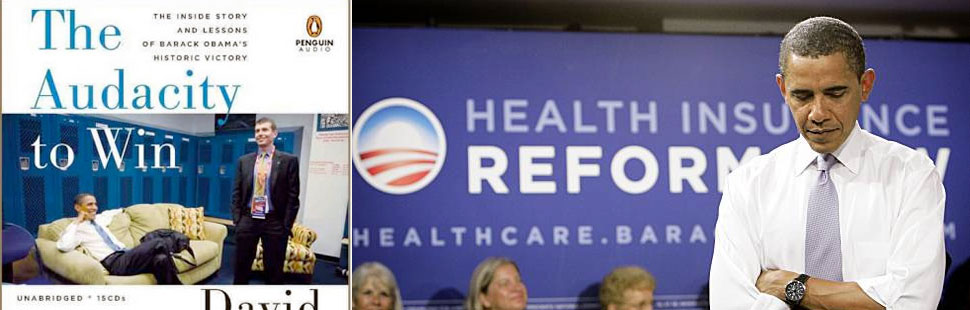
During this holiday break, I read "Audacity to Win" by President Obama's Campaign Manager David Plouffe. Whether you are a Blue Dog or Gingrich Republican, I recommend this book to any public relations professional (I saw it today for half-off at Barnes and Noble). Not only is it a well documented history of the 2008 Campaign, with insider views and frank discussions about what actually went on behind the scenes, but it is a blue print for how we, as PR professionals, can create memorable campaigns for our clients.
Plouffe and then-candidate Barack Obama did not just run a campaign, they created a movement. They did not follow the typical guidebook that comes with running for President, they set their own rules. They built a grassroots movement by talking to people and taking there message person-to-person, block-by-block, town-by-town. They started a dialogue, absorbed their ideas, developed a message and shared it. People wanted to do something for Barack Obama and the Obama Campaign had plenty for them to do. You could volunteer in a campaign office, go to a battleground state, raise money online, or join the discussion on-line.
The volunteers came because they were interested. That interest turned into action, then to passion. And throughout their involvement, not matter at what level, they felt a part of that movement -- Making President Obama's victory, was their victory.
Following the election, the President kept and continues to keep that movement alive, through Organizing for America (OFA), now run through the Democratic National Committee (DNC).
In the book, Plouffe tells us that "in politics your two main pillars are message and electoral strategy." The message is what the candidate offers voters in terms of vision, issues and biography. Plouffe tells us that you can adjust the tactics, but never deviate from your core message and strategy -- Have one slogan, and stick to it. Make decisions based on strategy and have a clear road map to know what is important, and commit to that map.
Plouffe also tells us that technology should also be the core of the campaign from day one. Use social media to raise money, move the message and organize. Create lists and sublists to keep key groups in the loop and a part of the campaign.
Important lessons for how we can help our clients create movements. A good book, a great read and important lessons for us all to know.
Today's Legal Market Demands Broad Business Solutions
*Story Originally Posted in the American Bar Association's Law Trends and News, Fall 2009, Vol. 6, No. 1. Today’s legal market demands a broad range of business solutions lawyers can provide their clients. A strategic communications plan can prove to be an extremely helpful tool law firms can provide their clients. For example, in today’s 24/7 media culture, companies lack access to and control over the media who cover their industry and to the people that talk about them online.
In addition, businesses often find themselves navigating a complex environment that requires dealing simultaneously with litigation, governmental and regulatory actions, media scrutiny, and public perception. Oftentimes business strategy demands a multidisciplinary approach of legal action, public relations, and government relations. Knowing where these issues converge can help protect your reputation and enhance your position in the marketplace. For example, new court rules were recently unveiled in Michigan directing jurors not to Twitter about the case before them or to turn to the Internet for information beyond that which was presented to them in the court. Social media is becoming more than a tool for us to use to stay in touch with friends: it is becoming a new area to look out for our clients' interests and/or a new medium to promote our practice.
Also, in just seven months, Congress has passed a number of key bills that have been enacted by the president, including the economic stimulus package, expansion of SCHIP, Pentagon acquisition reforms, and other key reforms. Congress is in the midst of tackling a number of difficult issues, including energy and climate legislation, health care reform, FY 2010 appropriations, the reauthorization of the transportation bill, financial regulation, food safety, and immigration reform—all of which will affect our legal practice.
As a result, attorneys should extend their services beyond the courtroom and into the court of public opinion or legislature. If attorneys will not provide such services, then they should build strategic partnerships with public relations firms and/or lobbyists. To meet the needs of today’s businesses, lawyers will need skilled advice regarding how to position their clients before the media or in front of the legislature, while legally protecting their clients.
For example, seeking PR counsel is an important aspect of representing clients in high-profile cases. Even if the issue is a small matter, there is no way we can tell how public opinion can or will shape the outcome of a case. Therefore, in engaging PR counsel:
Have the lawyer retain the PR firm as opposed to your client directly, to try to preserve attorney-client privilege;
The PR counsel should consult with the client only in the presence of an attorney and first talk things over with the attorney to seek their support and buy-in for the PR strategy.
Once a PR firm is engaged, they will (depending on the strategy):
Asses the situation, review any media to date;
Create key messages;
Create talking points for key audiences including, staff, vendors, clients, and the media;
Using the key messages, educate and sensitize the media to mitigate damage or control the story;
Facilitate interviews; and
Diligently work to preserve and protect your client’s image in the public eye.
“An attorney’s duties do not begin inside the courtroom door. He or she cannot ignore the practical implications of a legal proceeding for the client.” SeeGentile v. State Bar of Nevada (Kennedy opinion) 510 U.S. 1030, 1043 (1991). Just as an attorney may recommend a plea bargain or civil settlement to avoid the adverse consequences of a possible loss after trial, so too an attorney may take reasonable steps to defend a client’s reputation in the court of public opinion
In today’s fast-paced environment, where it may take years to build up one’s reputation and only seconds to destroy it, a lawyer’s role as advocate extends to managing his or her clients’ reputations inside and out of the courtroom.
Daniel Cherrin, an attorney, is the former communications director/press secretary for Detroit and to Detroit Mayor Kenneth V. Cockrel Jr. He is now president of North Coast Strategies, which provides cutting-edge practical advice where government action or inaction, litigation vulnerability, or complex regulatory requirements will impact your reputation and bottom line. You can reach Cherrin at dcherrin@NorthCoastStrategies.com or 313-300-0932.
Congressional Expectations in 2010
Congress is not even close to finishing the issues it began this past January, and when they return following their brief winter break, they will face a number of regulatory issues, including: Federal Trade Commission (FTC) -- Expect the FTC to get more involved in consumer financial protection. Under new proposed regulations, the FTC will be given more authority to levy fines and investigate firms doing with others know to violate FTC rules. Privacy will also be an issue, in terms of how media companies, retailers, advertisers and others collect and use consumer information. THOUGHTS??? Contact your Member of Congress.
Food and Drug Administration (FDA) -- Next year Congress also will look at our nation's food safety laws.
Transportation -- Congress will look at two major bills next year, including the new proposed "Jobs" bill and the re-authorization of the Transportation Equity Act which expired this past September but was extended into next year. Another issue however, will be an issue that a number states have already considered -- TXTing while driving. But these regulations will be geared toward truck drivers.
Environment -- Congress will continue their debate on climate change and air emissions while also looking at our nation's fresh water system.
Taxes -- Congress will also address tax issues that are set to sunset in the coming year. Regardless of the issues, next year proves to be a busy one. On top of the packed Congressional agenda, 2010 also is an election year so by definition each issue is a political issue and will be weighed in the context of how it is perceived back home. Therefore, it is vital that you make your views known, advocate for or against issues important to you and your business, and ask for money for various programs and projects. In this economy, we all can use a little help from Congress and the Federal government.
Lessons for Baltimore, from Detroit
Baltimore has been used as an example many times by Detroiters about what it did as a city to turn around its downtown, to revamp its waterfront and breathe life back into a city. Now, with its Mayor recently convicted of taking gift cards as bribes and using gift cards that should have been used as gifts for the needy, Baltimore can and should learn from Detroit. The Mayor of Baltimore refuses to resign after her conviction last week, saying she still has Baltimore's interest at heart. If the Mayor truly had Baltimore's interest at hear she would step down as Mayor, end the drama and let the city move forward without her. If she does not step down, then a cloud will continue to hover around the city.
With the Mayor staying in office, the city cannot move forward. Businesses will not want to do business with the city, its bond rating could be in jeopardy due to the volatile situation in the city, with a lack of uncertainty as to what may happen with or with out the Mayor, and the continued scrutiny of the Mayor.
There is no doubt that the Mayor's attorneys are advising the Mayor to stay put. It provides leverage in negotiating a settlement and a platform for her to speak. But her speech will be limited by what her attorneys tell her she can or cannot say, pending the legal action against her.
Now it is easy for me to sit here in Detroit and be critical of a Mayor who I don't know in a city that I have only visited. But, I can speak from experience about what a city needs to do to move forward and beyond the negative stories that have traumatized a city, a region and a state.
The Mayor of Baltimore and the President of Baltimore's City Council should learn from Detroit. Step down as Mayor. If she is not going to step down, then the President of Council should ask for her resignation, being to create a transition plan, meet with local business, community, labor and faith-based leaders. Travel to Annapolis and meet with the state legislative and executive leadership and begin to make the plans for taking Baltimore back and shift the focus from scandal to hope and opportunity, faith and transparency, accountability and action.